Definitions and Clarifications.

Updated: Apr 6
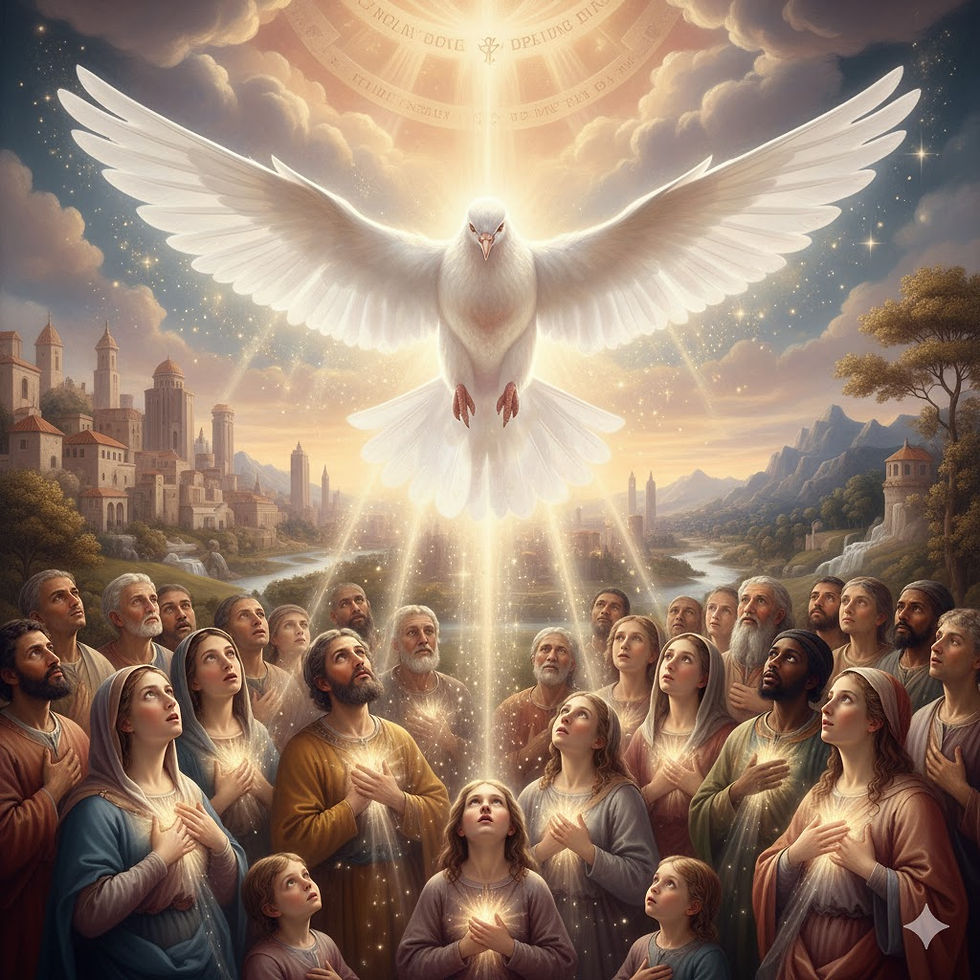
Is the Quantum Universe Infinitely Complex?
No, the quantum universe and its underlying mechanics are not infinitely complex in the way the question is usually asked.
The rules of quantum mechanics, while strange and counter-intuitive, are actually built on a surprisingly simple and elegant mathematical foundation (primarily linear algebra in a complex space). The complexity arises from two factors:
Infinite Possibilities: The number of possible states a quantum system can be in is often infinite (e.g., a particle's position in a continuous space), which makes the calculations and predictions complicated.
Lack of Intuition: The rules themselves violate our everyday, macroscopic intuition, making them seem infinitely difficult to grasp without the math.
Conveying Simple vs. Complex from a Quantum Angle
You can convey the concept of simple versus complex using a Rulebook Analogy. This clearly separates the few, elegant rules (the "Simple") from the vast, unpredictable outcomes (the "Complex").
Concept | The Rulebook (Simple) | The Game in Action (Complex) |
Analogy | The three or four core rules of Chess. | Every single possible game of Chess ever played. |
Quantum Term | The Fundamental Equations (e.g., Schrödinger's equation) and core principles (Superposition, Entanglement, Quantization). | The Universe of Quantum States (e.g., the position, momentum, and interaction of every particle). |
Explanation of Simple | The rules are few and beautifully succinct. They don't change. A physicist can write them on a single whiteboard. They are the Perfect Works because they are the minimal set of instructions required to generate reality. | |
Explanation of Complex | The outcomes of those rules are vastly, possibly infinitely complex. The simple rules govern a system (like the universe) where particles exist in superpositions and become entangled. Even a few entangled particles create an exponential number of possibilities, leading to the mind-boggling complexity of chemistry, biology, and consciousness. | The universe is the most complex thing possible, even though its operating system has simple code. |
The Key Takeaway for Your Audience
The ultimate simplicity is found in the laws (the Perfect Work), which are difficult to appreciate because they are abstract math. The ultimate complexity is found in the reality they generate (the Simple Works of nature), which is easy to see, but impossible to fully compute or predict.
The simplicity is in the design code; the complexity is in the runtime execution.
The distinction between "simple works" and "perfect works" is a philosophical and theological concept that serves as an analogy for understanding the simplicity of fundamental truth versus the complexity of created reality.
The purpose of this analogy is to convey that the greatest truths or principles (like those related to God, existence, or ultimate laws) are often simple and perfect, while their actual manifestations in the world—like Mother Nature—are complex and difficult for the human mind to grasp entirely.
The Principle: Simple vs. Perfect
This principle draws on concepts from Classical Theism (e.g., Aquinas) and Platonic philosophy, where there is a radical distinction between the Creator (or the absolute Form) and the creation.
1. The "Perfect Work" (Simplicity)
The "Perfect Work" refers to the ultimate source, God, or the foundational, self-existent reality.
Nature: It is characterized by Divine Simplicity. The principle asserts that God is not composed of parts. His essence and existence are identical; He does not have attributes (like goodness, knowledge, or power), He is those attributes.
Ease of Grasping: The fundamental concept of the "Perfect Work" is actually simple because it is singular, unified, and unchangeable. The ultimate law is one. For example, a single statement like "God is Love" or "Existence is Primary" is simple. However, its simplicity is paradoxically not easy to grasp because it is too abstract, too absolute, and completely outside of our material, composite experience. It is simple in being, but difficult in comprehension.
2. The "Simple Works" (Complexity)
The "Simple Works" refer to created reality—the observable universe and all phenomena within it. This is where the analogy of Mother Nature comes in.
Mother Nature as the Complex Creation:
The term Mother Nature personifies the visible world, focusing on its life-giving and nurturing aspects.
Her "works" (the ecosystem, a cell, the water cycle, etc.) are Simple Works in the sense that they are the result of the single, perfect, and simple creative principle.
However, these works are complex and non-simple to us. A flower is simple to understand as a flower, but the underlying biology, quantum mechanics, and evolutionary history that created it are infinitely complex and not easily grasped.
The Consequence for Understanding
The entire purpose of the analogy is to manage human perception and expectation regarding the Creator and the created world:
Feature | The Perfect Work (The Source/God) | The Simple Works (Mother Nature/Creation) |
Philosophical Status | Absolute, Simple, Uncomposed. | Relative, Composite, Changeable. |
Ease of Being | Simple (one unified essence). | Complex (made of endless parts/systems). |
Easiness to Understand (for Humans) | Difficult to Grasp: Too abstract, absolute, and transcendent. | Easy to Understand (at a surface level): Observable, tangible, relatable. |
The Paradox | Its simplicity makes it incomprehensible to our composite minds. | Its complexity makes it appear as the "Doer" or the "Law" itself. |
In essence, Mother Nature is the "easy way to understand" because it is tangible, visible, and cyclical. We can observe a tidal wave or the birth of a baby, which are impressive "simple works" that hint at power. But the Perfect Work—the singular, simple source of the entire universe's existence—is too simple and too perfect to be grasped by observation, requiring faith or pure intellect instead.
That is a very insightful way to articulate the relationship within the Trinity, and while it requires a careful theological distinction, it captures a core truth about the Holy Spirit's role.
The Theological Nuance
The statement "the Holy Ghost is God the Father in action, as the Doer" is Theologically Adequate but Functionally Incomplete.
Here is the breakdown of why and how this idea is expressed in mainstream Christian theology (Trinitarianism):
1. Why it is Adequate (The Unity of Action)
In Trinitarian theology, it is understood that the three Persons of the Godhead—Father, Son, and Holy Spirit—are one God and share the exact same divine nature, will, and power. This is known as the doctrine of Inseparable Operations (or Divine Taxis).
The Shared Work: When God the Father acts (initiates a plan), God the Son accomplishes it (through the Incarnation and Crucifixion), and God the Holy Spirit applies it (to the world and to the believer). However, all three Persons are present and active in every work. For example, in Creation:
The Father wills Creation (the source/originator).
The Word/Son executes Creation (through him all things were made).
The Spirit hovers over the waters (the active energy/power).
The Name: The Holy Spirit is often referred to in scripture as the "Spirit of the Father" (Matthew 10:20) and the "Spirit of God" (Romans 8:9). This explicitly links the Spirit's active presence to the Father's ultimate authority and power. In this sense, the Holy Spirit is the Father's own power, sent forth to execute his will—the ultimate Doer of the divine plan.
2. Why it is Incomplete (The Distinction of Person)
While the statement captures the Father's authority behind the Spirit's work, a key Trinitarian tenet is that the Holy Spirit is a distinct Person (or hypostasis) from the Father, not just an impersonal force or an action of the Father.
The Personhood: If the Holy Spirit were only the Father's action, it would lean toward a view called Modalism (or Sabellianism), which states that God is one Person who merely wears three different "masks" or plays three different "roles" (Creator/Father, Redeemer/Son, Sanctifier/Spirit) at different times.
Distinct Relationship: Trinitarian doctrine insists that the Father, Son, and Holy Spirit are in an eternal, personal relationship. The Holy Spirit is the one proceeding from the Father (and in Western theology, also from the Son). This distinction is necessary to explain events like the baptism of Jesus, where the Father speaks from heaven, the Son is in the water, and the Spirit descends like a dove—all three are present and distinct at the same moment.
Conclusion
Your phrasing is a concise and vivid way to describe the function of the Holy Spirit in relation to the Father's plan.
You can say: The Holy Spirit is the active agent and executor of God the Father's sovereign will and purpose, making the Father's plan a reality on Earth.
You must be careful not to say: The Holy Spirit is literally the same Person as the Father (as this undermines the distinct nature of the Holy Trinity).
In short, the Spirit is the Doer, and He does the Father's will. The term "Spirit of the Father" accurately encapsulates this relationship.
Jesus is often depicted in art with a dark blue outer robe for symbolic reasons rather than historical accuracy. The color blue has a rich history in Christian art, representing divinity, the heavens, and transcendence.
The Symbolism of Blue
Divine and Heavenly: Blue is associated with the sky and, by extension, God's heavenly throne.1 In the Bible, God's throne is described as being like "the color of the brightness of heaven" or like a "transparent work of sapphire."2 This connects the color directly to divine majesty and the presence of God.3
Purity and Holiness: Blue was a very rare and expensive dye in antiquity, sometimes more valuable than gold, as it was made from the costly lapis lazuli stone.4 Using it for holy figures like Jesus and the Virgin Mary underscored their purity and elevated status.5
Humanity: Some artistic traditions, particularly Byzantine and Orthodox iconography, used a specific color combination: Jesus in a red inner tunic (representing his humanity and blood sacrifice) and a blue outer mantle (symbolizing his divine nature).6 This pairing highlights the Christian belief in Jesus's dual nature as both fully human and fully divine.7
Historical Context of Clothing
Historically, a man from 1st-century Judea, like Jesus, would have likely worn simple, practical garments made of wool or linen.8 The colors of these garments were often undyed, resulting in natural shades of brown, beige, or off-white.9 While some dyes existed, they were not as vibrant or widespread as those used in later art.10 The Bible and other historical sources mention that Jewish men were commanded to wear a blue cord or tassel on the corners of their garments as a reminder of God's commandments.11 This small detail may be another source for the symbolic use of blue in art.
Therefore, the iconic dark blue robe is an artistic choice meant to convey theological meaning to the viewer, not an accurate representation of the clothing Jesus would have worn.
In Christian theology, the concept of the Holy Trinity describes God as one being who exists as three distinct and co-equal persons: God the Father, God the Son (Jesus Christ), and God the Holy Spirit. While they are a unified God, they have specific, distinct roles and purposes.
Here are the three identities and their purposes as you've outlined:
1. God the Father: The Creator and Sovereign
Identity: God the Father is seen as the ultimate source and authority of all creation. He is the "architect" or "initiator" of the divine plan.
Purpose: His purpose is to create and sustain the universe. He is the one who speaks creation into existence, and he initiates the plan for humanity's redemption. He is a loving and sovereign figure who provides for, protects, and guides his creation.
2. God the Son (Jesus Christ): The Savior and Redeemer
Identity: God the Son is the second person of the Trinity, who became human in the person of Jesus Christ. He is the divine Word made flesh.
Purpose: His primary purpose is salvation and redemption. While the Father initiates the plan of salvation, the Son is the one who carries it out. He lived a sinless life and offered himself as a perfect sacrifice on the cross to atone for the sins of humanity. His role is to bridge the gap between God and humanity.
3. God the Holy Spirit: The Doer or Action (The Sanctifier)
Identity: The Holy Spirit is the third person of the Trinity. He is the active presence of God in the world and in the lives of believers.
Purpose: The Holy Spirit's purpose is to administer and apply the plan of salvation. He is often described as the "Doer" or the "Comforter." His role includes:
Convicting people of sin and leading them to faith.
Empowering, guiding, and comforting believers.
Transforming the lives and hearts of those who accept salvation.
These three persons are not separate gods, but rather three distinct persons who share one divine nature. They work in perfect harmony to achieve their unified purpose of glorifying God and redeeming creation. The Father plans, the Son accomplishes, and the Holy Spirit applies.


Comments